
| Benin: An African Adventure by José Coltro |
How It All Began
Since 2018, I have worked with a supplier in Nigeria named Harmony Eli, whom I helped train in collecting and preparing shells. He proved enthusiastic and dedicated, always searching for interesting material from the Gulf of Guinea. His specialty soon became land snails of the family Achatinidae, including uncommon species such as Atopocochlis auripigmentum (Reeve, 1848), Pseudachatina wrighti (Sowerby, 1853), and Lignus flammigerus (Férussac, 1821), as well as a wonderful variety of Limicolaria in different shapes and colors.
After years of working together, I wanted to meet Harmony in person. I began planning a trip to Nigeria in 2022, but the Italian government advised against traveling there. As an Italian-Brazilian, I decided to consider a meeting in Cameroon or Benin instead. The more I read about Benin, the more I wanted to visit it. I arranged flights, hotels, transportation, and Harmony’s journey to Cotonou, the country’s largest city. He was especially excited: it would be his first trip abroad and his very first airplane flight.
A Forgotten Visa and an Unexpected Encounter
Everything was ready for my Air France journey from Milan to Cotonou via Paris. Or so I thought. At check-in, the airline employee asked about my visa. My visa? I had completely forgotten to apply for one! I told her I had not received it yet, and she calmly checked me in. I hurried to the Benin visa website and paid €270 for an emergency application, only to discover that the visa would become valid the following day. My flight would arrive around 11 p.m., so I hoped I could wait a few hours at the airport if necessary. With that optimistic thought, I boarded for Paris.
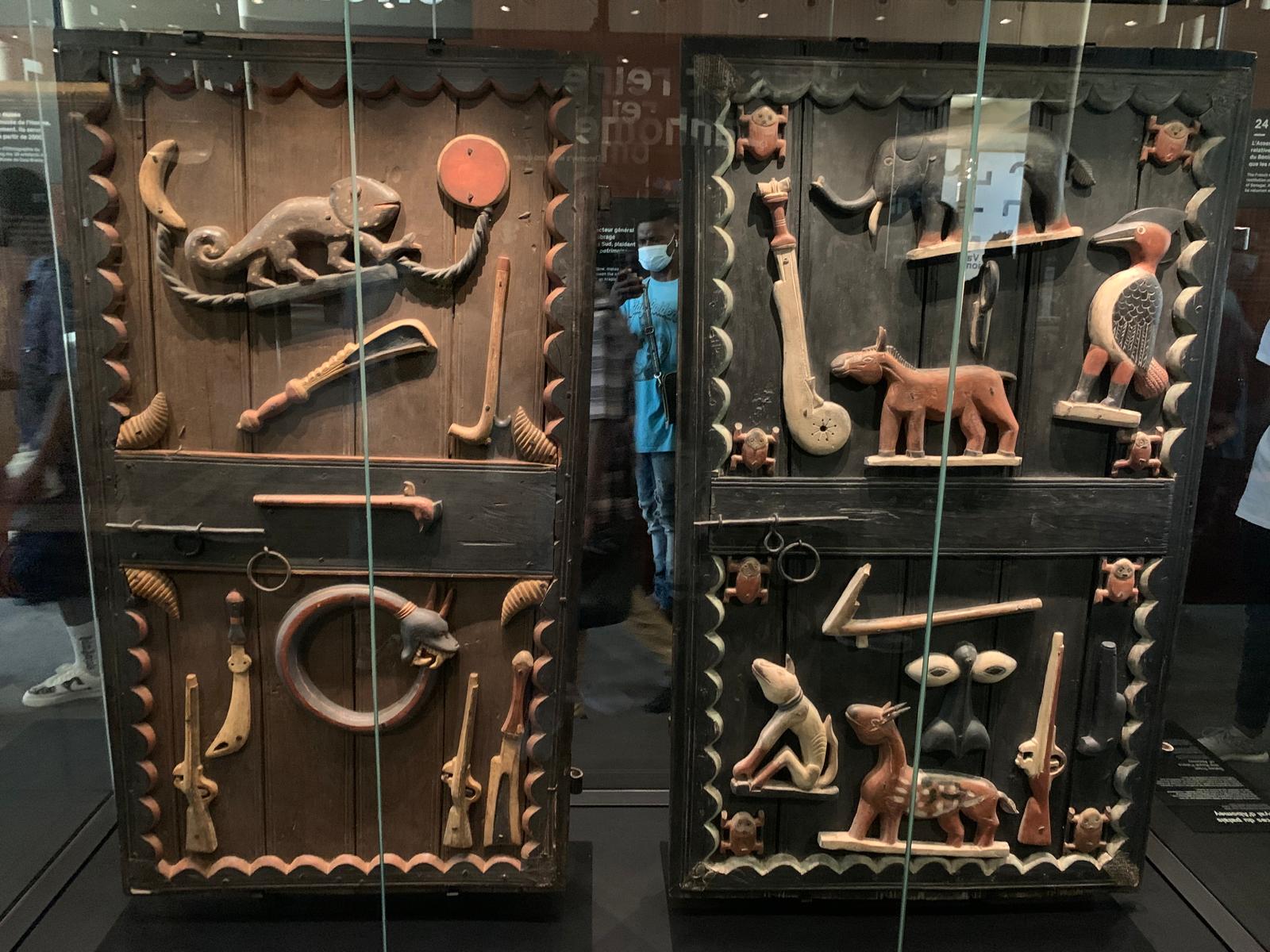
On the flight to Cotonou, I was seated in the first row of Business Class. Flowers and a card had been placed on the empty seat beside me, and I assumed they were for a retiring crew member. In fact, the seat was reserved for Aurélien Agbénonci, Benin’s Minister of Foreign Affairs! Before traveling, I always read about my destination, and I had recently learned about the restitution of 26 historic objects from France to Benin. The artifacts had been taken from the former Kingdom of Dahomey and kept in the Musée du Quai Branly in Paris; the minister had been involved in the negotiations for their return.
When he arrived, even the pilot came to greet him. He was friendly, and we talked for much of the five-hour flight. Near the end, I mentioned my visa problem. He reassured me, kindly gave me his private telephone number in case of an emergency, and invited me to see the exhibition of the returned Dahomey treasures. As it turned out, immigration and customs went smoothly. Hotel staff were waiting outside the airport, and I could finally relax. Now I only had to wait two days for Harmony.
Shells, Markets, and a Motorcycle Taxi in Cotonou
On my first morning, I decided to explore the beach near the hotel. Although the hotel was almost on the waterfront, I had to walk around the property to reach the sand. Along the way, several motorcycle taxi drivers offered me a ride. I declined and continued to the beach, where the compact sand and rocky patches yielded Hastula aciculina (Lamarck, 1822), Donax pulchellus Hanley, 1844, Stramonita haemastoma (Linnaeus, 1767), Nerita senegalensis Gmelin, 1791, and a species I was particularly happy to find, Cellana ghananis (Christiaens, 1974).
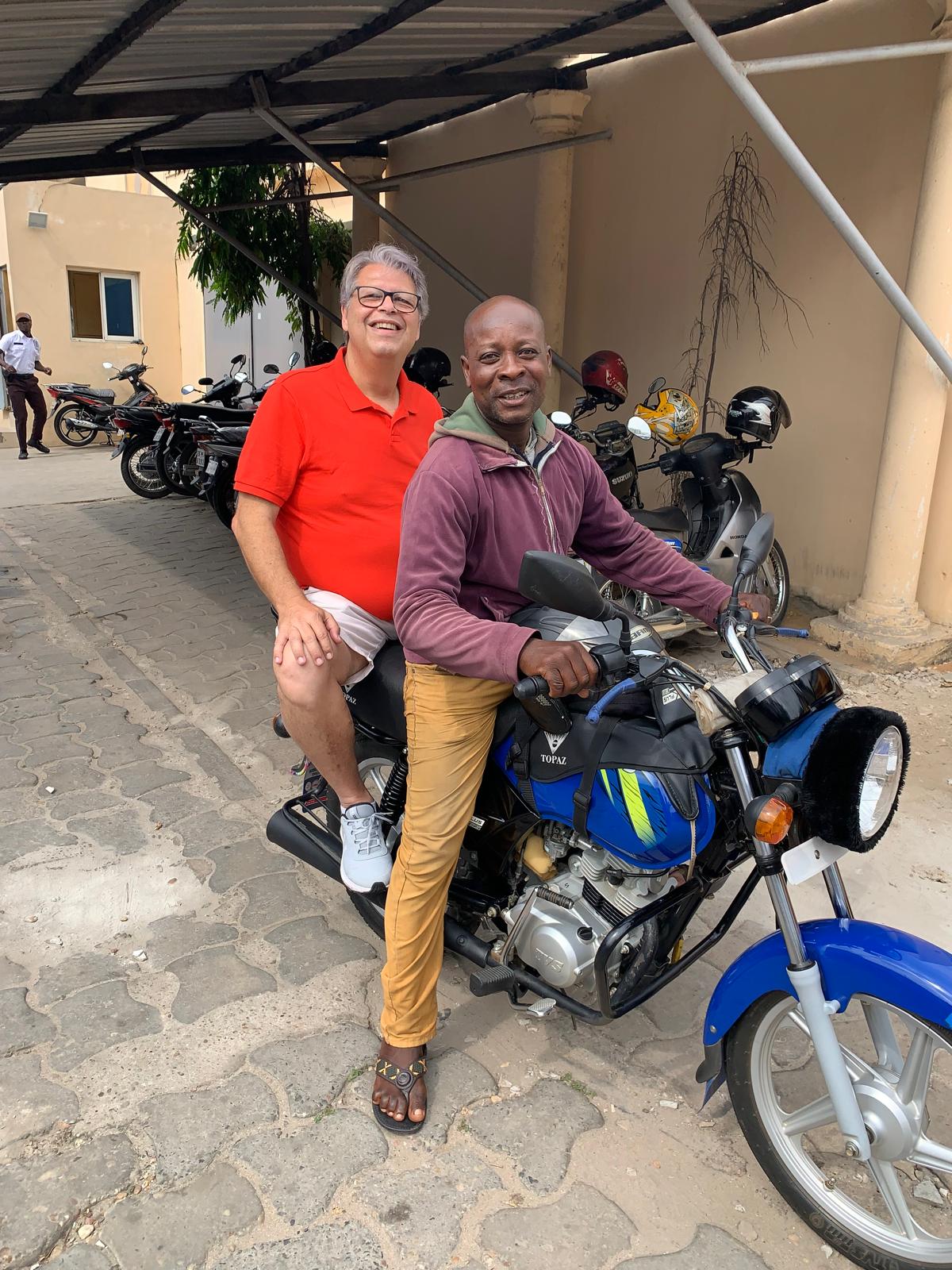
On my way back, the motorcycle taxi drivers approached me again. This time I accepted and asked one of them to take me to a market. There was only one small problem: I had never ridden a motorcycle in my life! Cotonou was quite an introduction. Thousands of motorcycles wove between cars, squeezed through impossibly narrow spaces, and overtook each other in a chaotic two-wheeled dance. My driver joined in enthusiastically — and, to my surprise, I loved every minute of it!
Our first stop was a fish market, but there were no mollusks for sale. My driver suggested Marché Dantokpa, Cotonou’s enormous market, where I eventually found a seller of terrestrial snails. Among the specimens were beautiful Archachatina degneri Bequaert & Clench, 1936, Archachatina marginata (Swainson, 1821), and Lissachatina fulica (Bowdich, 1822). Back at the hotel, I asked whether someone could clean the shells. The restaurant chef came to ask how I wanted these delicacies cooked! Explaining that I wanted the shells rather than the snails themselves proved surprisingly difficult.
I discovered that hiring a car with a driver was much cheaper than renting a car. I found an English-speaking driver who knew the area well, and the next morning he took me to the airport to meet Harmony. My friend arrived beaming after his first flight and later admitted he had never stayed in such a nice hotel. While he rested, I explored more markets. Later we examined the land and marine shells he had brought from Nigeria, and I gave him the suitcase of gifts I had carried for him. His delight was unforgettable. Sadly, he could stay only two more nights.
Ouidah: Sacred Pythons and a Shared History
Harmony had particularly wanted to visit Ouidah, home to the famous Temple of Pythons and an important center of Vodun. This religious tradition, deeply rooted in the history of the region, influenced traditions across the Atlantic, including Haitian Vodou and Brazilian Candomblé. Ouidah was also a major departure point during the transatlantic slave trade, and the city has powerful historical ties to Brazil. Formerly enslaved people and their descendants who returned from Brazil helped shape the area’s cultural heritage.
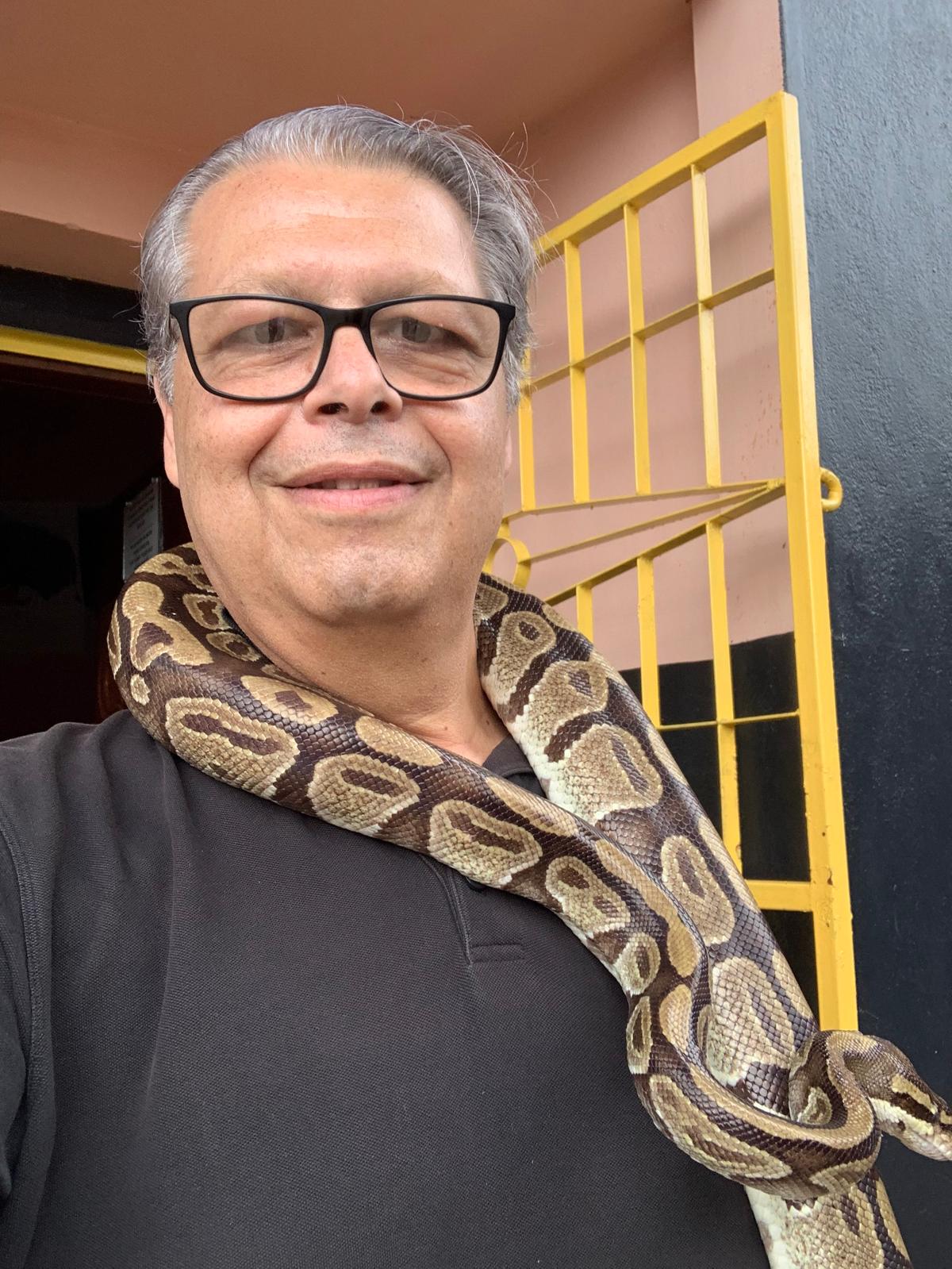
Even the drive brought surprises. Rather than stop at a conventional gas station, our driver pulled up at a small house. A woman appeared carrying a large glass container of gasoline, negotiated a price, and poured it straight into the tank! At the Temple of Pythons, we learned about the sacred status of the snakes. According to the tradition described to us, the pythons are periodically allowed to roam and may enter local homes, where their presence is considered a blessing. I happily let the snakes coil around my neck; Harmony needed rather more encouragement!
We continued to the nearby beach, where the open ocean and powerful surf astonished Harmony. He lives in Port Harcourt, in the Niger Delta, where mangroves and sheltered waterways are common. For me, however, the beach looked unpromising for collecting, and I found no shells at all. At lunch I was surprised to see feijoada on the menu, a wonderful reminder of the long cultural connections between Brazil and West Africa.
Our visit also included the Route des Esclaves and the moving Door of No Return memorial. Standing there and thinking of the countless people forced from their homes and transported across the Atlantic was deeply affecting. It is difficult to imagine the suffering and cruelty associated with this place. The experience was one of the most memorable, and most solemn, moments of the journey.
Porto-Novo, Lake Nokoué, and the Treasures of Dahomey
On Harmony’s final day, we explored Cotonou before I accompanied him to the Nigerian border. He preferred to travel home by bus and asked for the difference in airfare in cash. We said goodbye with the promise of continuing to work together. I then traveled with my driver to Porto-Novo, Benin’s capital, where I visited a university to learn about projects involving the breeding of giant African land snails, as well as King Toffa’s Palace. Porto-Novo’s Afro-Brazilian heritage is visible in its architecture and culture.
We also visited Lake Nokoué and the remarkable stilt-house community of Ganvié. Boats are essential to daily life there, and I was told that children learn to swim before they learn to walk! I explored the market, hoping for interesting mollusks, but the brackish lake yielded nothing special for my collection. Even so, the scenery and the community made the visit worthwhile.
On my last day, I finally visited the exhibition of historical treasures returned from France to Benin. Seeing objects from the former Kingdom of Dahomey back in their homeland was moving, and it reminded me of the unexpected conversation with Minister Agbénonci on my flight. What a remarkable way to bring the trip full circle!
Final Impressions
In the end, my visit did not yield a particularly large collection of local mollusks; most of the shells I brought home had been collected in Nigeria by Harmony. But the journey offered much more than specimens. I discovered a country rich in history and culture, with fascinating links to Brazil, and met warm, friendly people. I was impressed by the cleanliness, organization, and peaceful atmosphere I encountered. Benin exceeded my expectations, and I returned home with memories far more valuable than a suitcase full of shells. Would I go back? Absolutely!